Summer 2026 Survey: How is AI Adoption Going on Wall Street?

Rogo has the privilege of calling over 300 firms our clients, including a majority of the leading investment banks. Earlier this year, Rogo formed an AI Executive Council, a panel of senior executives from many of the top institutions we serve: bulge-bracket and elite boutique banks, leading European firms, and the top firms in the middle market.
We surveyed the Council on the state of AI transformation at their firms. The findings paint a picture of where the industry stands and where it's headed.
While AI adoption at financial institutions is still in its early innings, usage is proliferating quickly across every level.
ROI remains difficult to quantify, yet a majority agree that their firms must embrace the change management needed to capitalize on this technology.
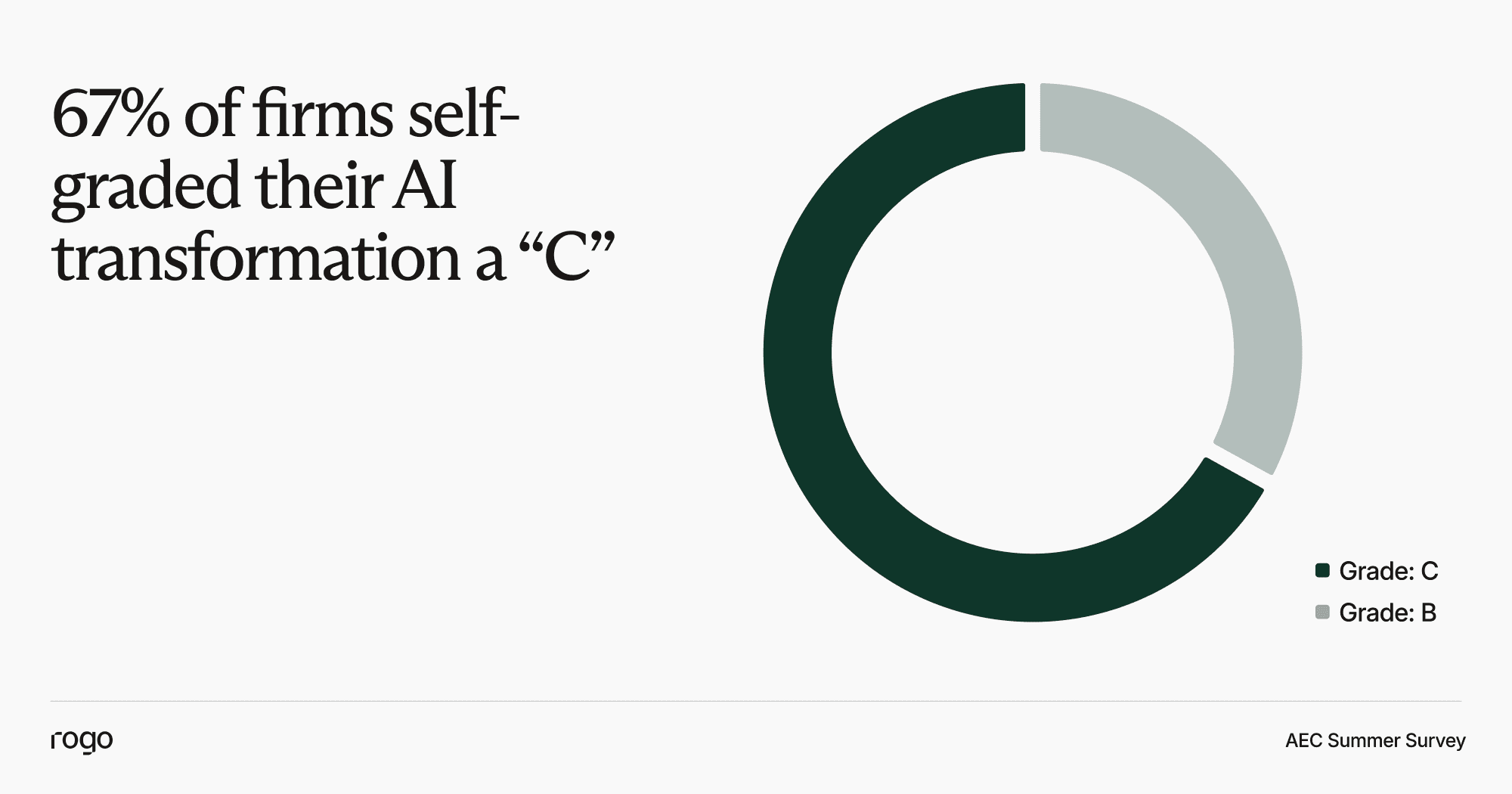
I. There is no north star for success, so many leaders grade themselves harshly.
Asked to grade their own AI transformation, 67% of firms gave themselves a C. The rest gave a B.
Not a single firm gave itself an A.
This Council represents some of the most advanced AI adopters across Wall Street, yet even the firms furthest ahead don't feel ahead.
Part of the reason for the critical grades is that few firms have a clear sense of what good looks like, making it hard to know where they stand relative to peers.
In our view, the firms leading are doing two things:
First, they clear the path as new models, architecture changes, and features emerge, and they get them approved internally, fast.
Second, they prioritize integration with first-party data, connecting tools like Outlook, CRMs, and shared drives.
What sets the leading firms apart is the ability to evolve quickly and leverage their own data.

II. The universal view: it's still (very) early.
75% of respondents believe we're in the first or second inning of AI in investment banking. Nobody said later than the fourth.
For all the noise around AI on Wall Street, the people deploying it inside the world's biggest firms agree that the transformation has barely begun.
Only in the last handful of months have the models graduated from answering questions to automating deliverables.
Even the leaders have just begun to scratch the surface of what marrying agentic workflow automation with first-party data unlocks.
We believe that pairing will drive meaningful productivity gains, through the automation of workflows, over the coming months.
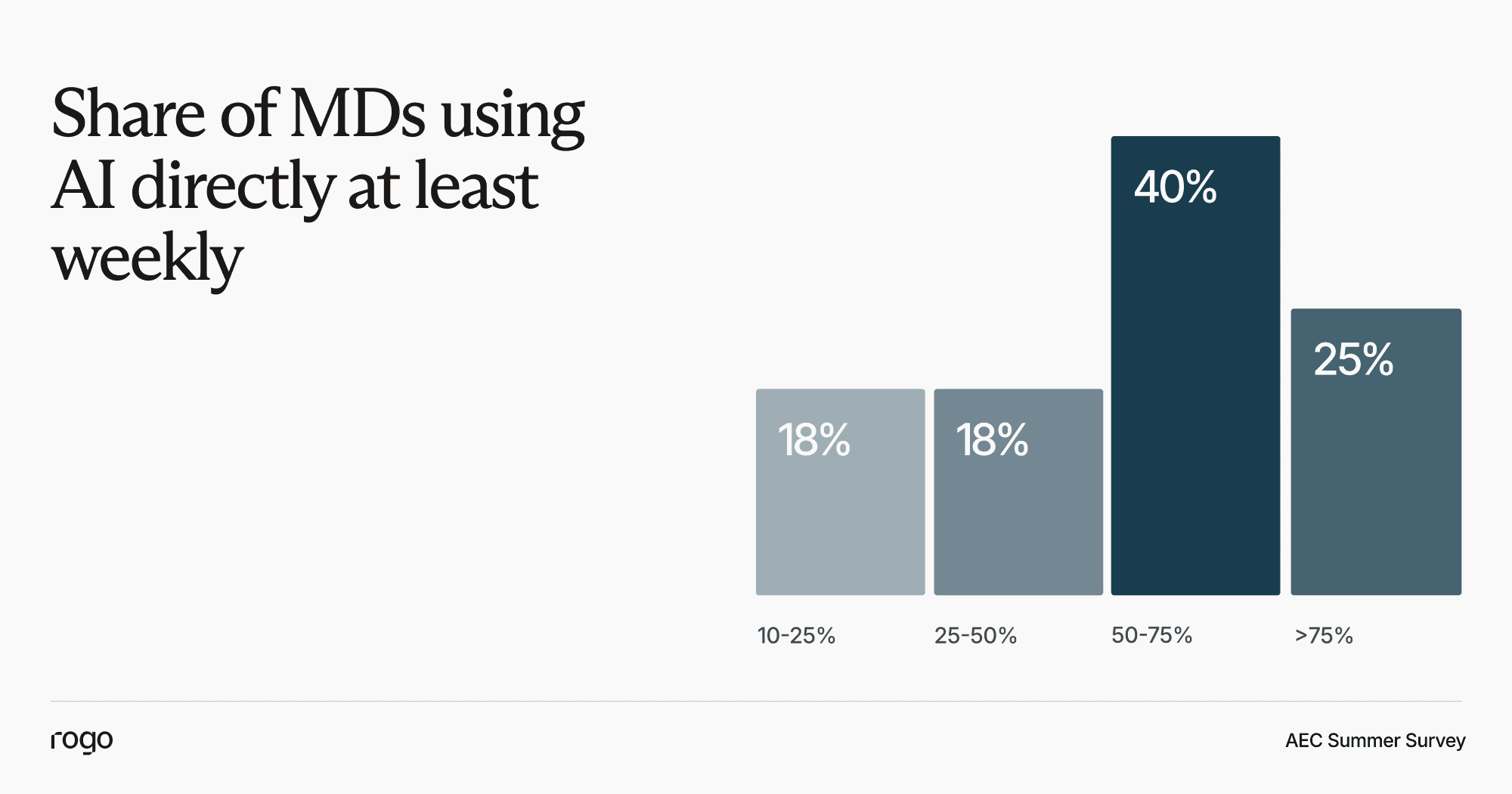
III. Senior adoption has arrived.
Two-thirds of firms now report that a majority of their MDs use AI directly, i.e. not through a junior, at least weekly.
This matches what we've seen in the usage data: as the technology has gotten stronger, the difficulty of using it well has gone down, and senior adoption has begun to follow.
Lower-friction surfaces, interacting with Felix over email and the iOS app, have accelerated it. The MD who wouldn't open a new website will happily send an agent an email.
This is changing how teams work. It's now common for MDs to build the shell of a deck themselves using Felix, then hand the first cut to their juniors to tighten and polish.
The work still flows down the hierarchy, but as senior bankers lean into the technology, the cycle time to a finished product has shortened materially.
The higher adoption climbs the investment banking hierarchy, the nearer it gets to the clearest measure of economic value: fees per MD.
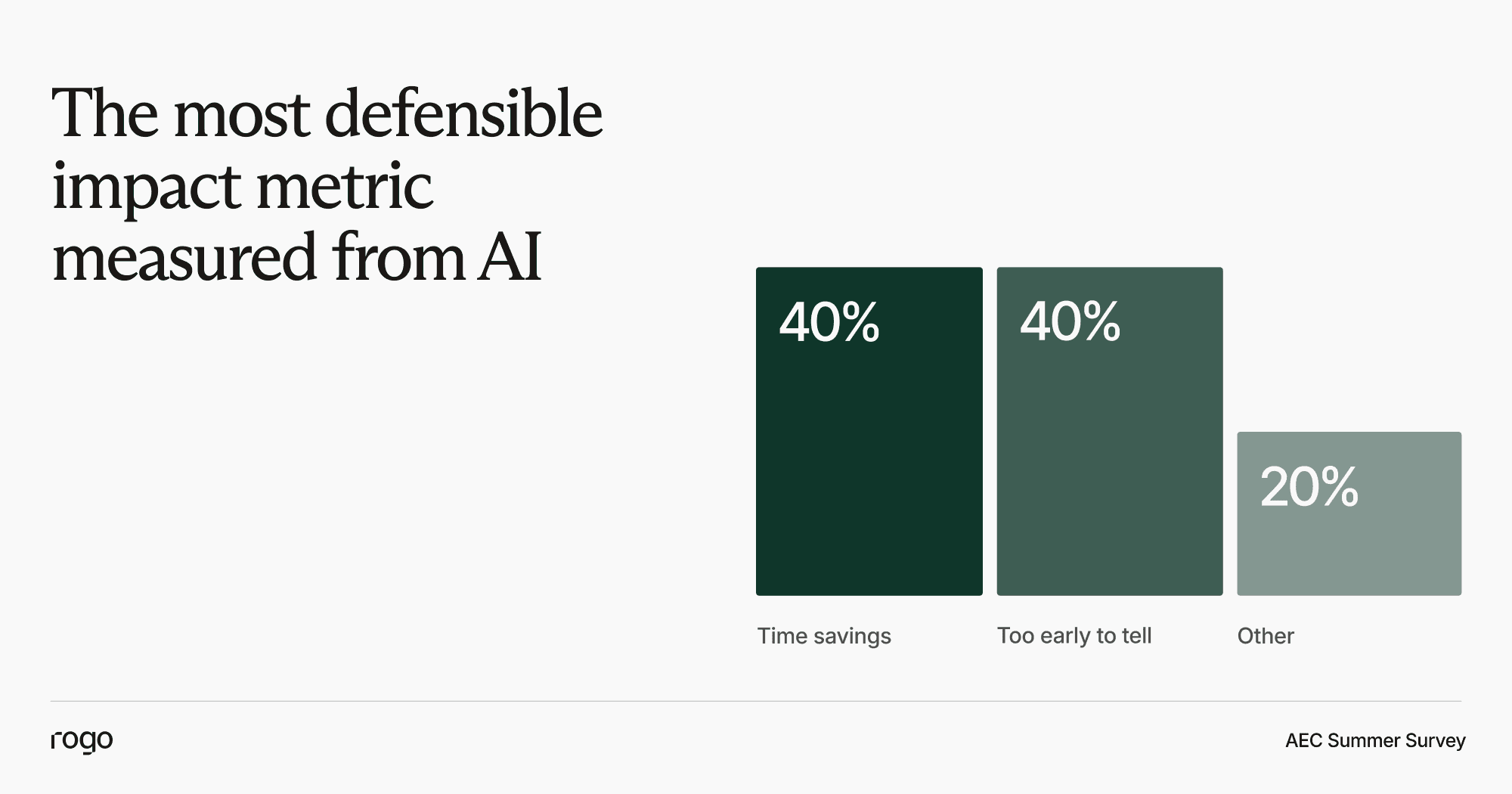
IV. AI's impact is clear but hard to measure
On measuring ROI, the panel split almost evenly: roughly 40% say it's simply too early to quantify, and another 40% are anchoring on time savings for junior bankers.
What is clear is that no silver bullet metric has emerged.
Beyond the obvious time savings, the sharper measures cut closer to the deal: whether a sell-side prep process can run in weeks instead of months, whether that speed lets a firm take on more mandates, and whether AI can pull spend out of the rest of the tech stack.
At a higher level, two frameworks have emerged for thinking about the spend itself. The first is a productivity break-even: AI spend over headcount spend, with the yield setting the bar for what you have to believe about productivity gains to justify the investment.
The second is a deal break-even: AI spend against the firm's average fee per mandate, which for most firms works out to only a deal or two.
Measuring the exact ROI of these tools is a bit like measuring the ROI of a specific deal-related workflow (e.g. working group list, diligence tracker, etc.), critical to completing the deal but difficult to ascribe a specific value to.
As the product moves up the value chain, from answering questions to producing deliverables and automating full workflows, the ROI will become easier to quantify.
For now, firms are still working out how to measure it.
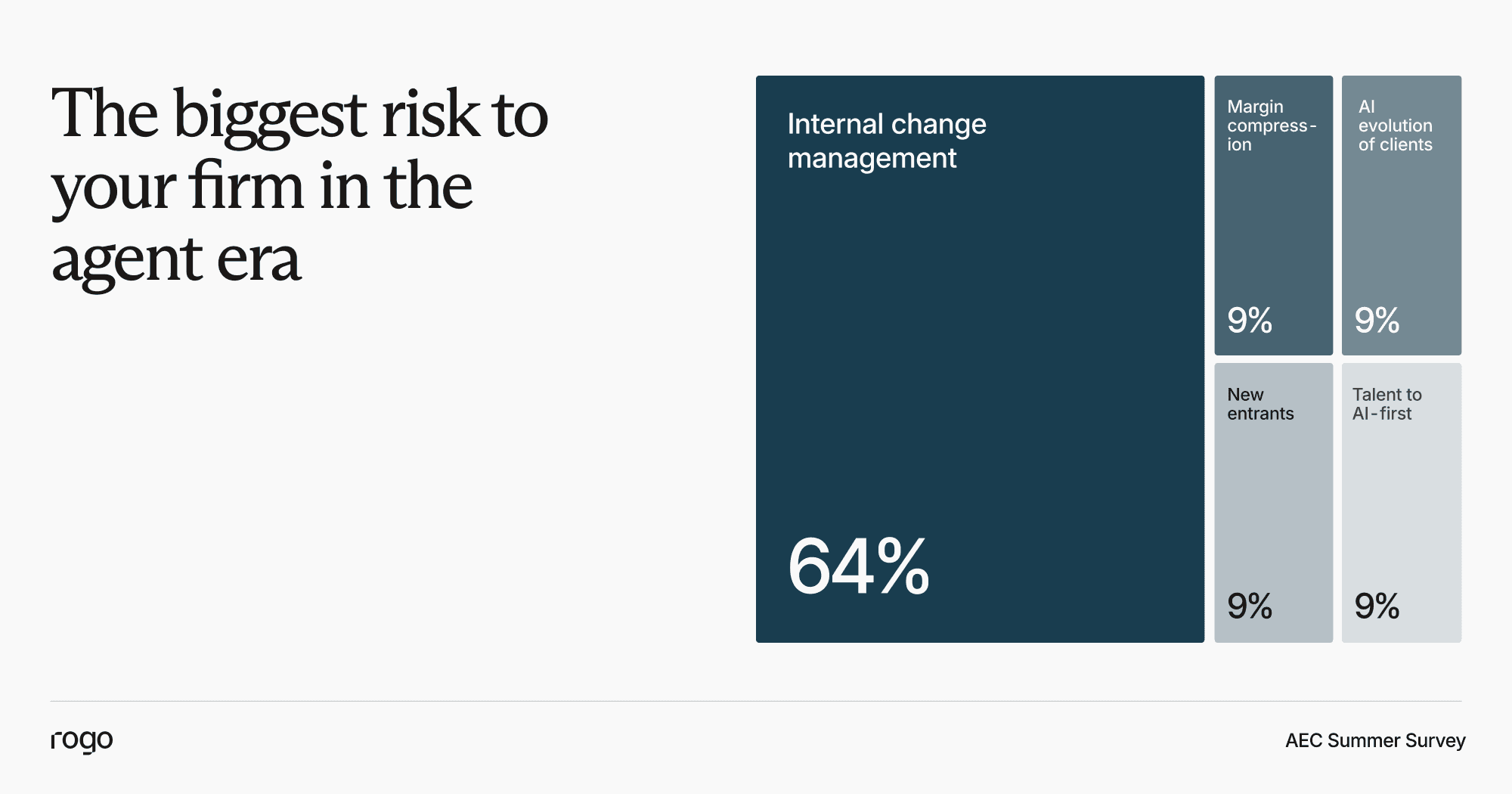
V. Firm culture change lags technology adoption
This was one of the few questions with strong consensus: 64% of respondents named internal change management as the biggest unsolved issue for their firm in the agentic era, ahead of new entrants, margin compression, and talent flight.
The firms navigating this best share a profile: approval structures built to move quickly as the technology evolves, and teams dedicated to deployment and upskilling from senior to junior dealmakers.
What ties those traits together is a willingness to build and evolve the organization around the technology, so they do not get left behind by more AI-native competition.
Thrive Holdings made the same point in its June 11th post, Long Humans:
“When electric motors arrived, the first factories simply ripped out the central steam engine and dropped one big electric motor in the basement. They gained slightly better efficiency, but nothing fundamentally changed.
The actual gain came when factories redesigned the floor around a smaller motor. A salesman could give you the most efficient motor ever but only the owner had permission to redesign the floor.
AGI is a similar moment. It will automate more than any tool before, so the largest gains will come from redesigning the workflows themselves.”
Thrive Holdings
"Long Humans" June 11, 2026
The most capable tools won't redesign a firm's floor plan on their own, as only the firm can do that, but the right partner makes it possible to pair a tacit understanding of the industry with a grasp of how the firm works.
The ability to adapt quickly to a changing technology landscape is becoming a source of strategic value.
About the Survey:
The data represents 12 leading investment banks, from bulge bracket to elite boutique to middle market, represented by their senior operating and technology leaders (COOs, CTOs, CIOs, and heads of AI and data), each directly responsible for AI adoption in the front office.


