AI in Private Equity: Use Cases Across the Investment Lifecycle

A private equity firm runs on remarkably few people. A handful of professionals carry sourcing, diligence, portfolio work, and exits at the same time, frequently across several live processes. How much each person can produce sets the ceiling on what the firm can pursue.
AI in private equity removes the manual assembly work across sourcing, diligence, portfolio monitoring, and exit. The firms that gain the most also own the intelligence that work produces, rather than leaving it inside a single AI lab's memory.
This article covers the use cases across the investment lifecycle, what it takes to deploy AI inside a private equity firm, and how Rogo supports the full cycle as agentic AI for private equity.
Why AI has become a strategic priority for private equity
The case for AI in private equity rests on market conditions rather than on the technology itself. Competition for quality assets has intensified, the diligence burden per deal has grown, return expectations have compressed, and limited partners now ask for reporting at an ever more demanding depth and frequency.
Those pressures land on teams that do not expand to meet them. A deal team of three or four covers an entire process, so the binding constraint is not ambition or judgment but hours, and most of those hours go to assembly: pulling numbers out of documents, reconciling them, and formatting the result. Removing that assembly work raises what a team of a given size can take on.
The largest returns sit inside the portfolio. A fund's returns depend on how its portfolio companies perform, so AI applied inside those companies works directly on the numbers that decide the fund's result.
Closer to the deal itself, AI works as a thought partner. Felix, Rogo's autonomous AI agent for finance, pressure-tests the investment thesis, surfaces the precedents that cut against it, and answers the committee's follow-up questions in the moment rather than in a follow-up memo. The precedents it reaches for are the firm's own, not a generic set.
Senior investors are among Felix's heaviest adopters. A partner can test a hypothesis directly instead of sending it down to a team, prepare for a management meeting from the firm's own history with that company, and get a sensitivity analysis without asking a junior to rerun the model. Many work this way by email or phone between meetings, reading from and writing back to the CRM without opening an app.
Associates and VPs work on the same platform for the production work: the models, the comps, and the memo drafts that carry a deal to committee. Felix runs these multi-step tasks on its own and returns a finished deliverable rather than a starting point.
AI use cases across the private equity investment lifecycle
AI applies at every stage of the investment lifecycle, and the work it removes is different at each one. The sections below cover sourcing, diligence, investment decision making, portfolio monitoring, and exit in turn.
Deal sourcing and market mapping
Sourcing begins with a target universe, and building one has always been a question of coverage. An agent assembles and refines that universe from filings, investor presentations, news, structured data sources, and the firm's own prior deal notes, so the starting list reflects what the firm already knows alongside what is publicly available.
Completeness is the hard part. A model asked to produce a list will return a plausible one rather than a complete one, and in sourcing, a missing name is a missed deal. That is the problem that screenings, Rogo's deterministic screening capability, solves: it runs the firm's criteria across structured data sources and returns every match rather than a sample.
The criteria are configurable to whatever the thesis requires. Two examples: every sponsor-backed deal in a defined sector over a set period, or every company meeting a specific revenue and EBITDA profile, each surfaced completely rather than sampled.
The list is then scored against the firm's thesis criteria. Where the firm has looked at a company before, its own prior diligence is scored alongside the public record. Market maps and competitor landscapes come out more complete than a manual build, covering the full set of players rather than the ones the team already knew to look for.
The same screen can also test a thesis before the firm commits to it. Running it across past deals shows whether the pattern the thesis assumes is actually there.
CIM review and data-room interrogation
Diligence runs on a fixed timeline. A deal team works through ever more CIMs, data rooms, filings, and internal notes without adding headcount and without lowering the standard.
Felix runs that document review end to end, with the whole deal context in one place rather than split across the data room, the inbox, and a local folder. A deal team can question a quality of earnings (QoE) report or a full data room in plain language. The answers draw on the entire room, not the handful of files someone had time to read, turning several days of manual review into minutes.
Diligence also runs on data cuts. Customer, cohort, revenue, and retention cuts get pulled from the files already in the data room, then rebuilt against the updated set each time new material lands, so the analysis moves with the room instead of lagging behind it.
Investment decision making
The investment committee's contribution is judgment, and nearly all the work preceding it is assembly. That work lands in the investment memo, the document the committee actually decides from. Felix produces first drafts of the memo in the firm's own format, drawing on the firm's prior deal precedents rather than a generic structure.
In a drafted memo section, every figure deep-links to the source it came from. A partner can check any number in place before the meeting rather than sending it back for verification.
What changes is where the team's hours go. The work shifts from assembling materials to refining judgment and narrative, which is the part of the memo that decides anything.
Portfolio monitoring and value creation
Portfolio work generates a reporting cycle that never stops. An agent collects each portfolio company's performance numbers, compares them against plan, and drafts the board pack from the result.
Value creation is where the same capability delivers the most return. An agent identifies operational levers, tracks progress against initiatives already underway, and benchmarks performance across the portfolio, so a pattern that holds in one company can be tested against the others.
Monitoring also runs on its own. A scheduled agent can flag covenant or KPI deviations across the portfolio on a set cadence, without anyone gathering the underlying data by hand.
Exit planning and buyer identification
Exit work leans harder on internal data than any other stage of the lifecycle. Private companies disclose little publicly, so every bidder and adviser works from the same thin external record. What separates one private equity firm's view from another is its own relationship history and prior diligence.
Buyer lists are where that shows up first. Rogo reads the private equity firm's own CRM, so each potential acquirer on the list arrives with that firm's history attached: who has been met, what was discussed, and how past approaches landed. Without it, the list is a set of public profiles the team has to annotate from memory.
The connection runs both ways. Partners read from and write back to their own CRM through Rogo, so an exit process updates the private equity firm's system of record instead of ending in a separate document no one opens again.
Alongside the buyer work, an agent synthesizes exit precedents and comparable transactions to inform timing and positioning.
There is a harder question a partner asks before an exit: what do our best investments have in common? Assembling that answer by hand, across a team and across the decades a firm has existed, is slow enough that it rarely gets done at all.
Rogo Intelligence carries that pattern forward. It is the firm's context layer, sitting between the firm's knowledge and the AI systems that use it, holding what the firm learned on prior deals and outcomes as structured, permissioned records. The firm's edge in judgment becomes explicit and reusable rather than held by whoever happened to be in the room.
What it takes to deploy AI in private equity
Several things decide whether AI works inside a private equity firm, and the capability of the underlying model is not among them. The table below is the practical checklist.
Requirement | What it means |
Governance and permissions | MNPI protected, deal data isolated, and access controlled by role |
Security validation | Controls tested continuously rather than once a year |
Traceable output | Every number links to the source it came from, down to the sheet, range, and cell |
Owned institutional knowledge | The firm keeps what it encodes, across whichever AI tools it uses |
Adoption | Rollout reaches partners and daily users alike |
Governance and permissions come first. Material non-public information (MNPI) has to stay protected, deal data has to stay isolated, and access has to be set by role rather than granted broadly. Rogo runs in isolated environments inside the firm's own security perimeter and does not train on firm data.
Security validation is continuous rather than annual. Rogo's posture covers SOC 2, ISO 27001, bring-your-own-key encryption, and SCIM provisioning, alongside external-auditor-validated compliance with the EU AI Act. Sisyphus, Rogo's autonomous security agent, runs offensive penetration testing daily.
Traceable output is the requirement most specific to this industry. Every number that reaches a model, a deck, a memo, or an LP communication has to trace to where it came from. Rogo's citations resolve to the exact source, and for spreadsheets that means the specific sheet, range, and cell rather than the file.
Ownership of what the firm encodes is the fourth requirement. As a firm teaches an AI system how it evaluates a business, that accumulated judgment becomes an asset, and it should not sit inside one provider's memory as unstructured text. Rogo Intelligence holds it as structured, permissioned entities with provenance and a full audit trail, and it exists independently of any foundation model, so the firm keeps what it built across whichever AI tools it uses.
Adoption is the last requirement and the one most often underestimated. A rollout has to reach partners and daily users alike, which is why change management decides outcomes more reliably than feature lists do.
How Rogo supports the full PE deal cycle
A point tool covers one stage of the investment lifecycle, so a firm ends up with a different tool at each stage. One platform that runs the full cycle, inside the tools deal teams already use, removes that fragmentation. The table below maps what Rogo runs at each stage.
Deal stage | What runs inside Rogo |
Sourcing and market mapping | Target universes built from the public record and the firm's own deal notes, scored against thesis criteria |
Diligence | CIMs, data rooms, filings, and transcripts interrogated in plain language, with data cuts rebuilt as the room updates |
Investment decision making | Memos and decks drafted in the firm's format, the thesis pressure-tested, and committee follow-ups answered on the spot |
Portfolio monitoring | KPI pulls, board packs, variance analysis, covenant and KPI deviation flags |
Exit | Buyer lists enriched from the firm's own CRM and relationship history, exit precedents and comparables |
Every stage | The firm's own deal knowledge captured as structured, permissioned data it owns |
The internal data behind that coverage is what makes it matter. Private companies publish little, so the external record on a target is thin and identical for everyone looking at it. A firm's own CRM, prior diligence, and deal notes are the part no competitor has.
Felix works as one agent across the lifecycle rather than a separate tool at each stage, so context built during sourcing is still there at exit. As one example, Rogo ran the M&A analysis for four of its own acquisitions on its own platform, producing first-cut deal summaries in under ten minutes with no external advisors.
Felix also runs where the work already happens: in Excel, in email, on iOS, and against a live data room synced through VDR providers, including but not limited to SS&C Intralinks. Connecting the data room puts the whole deal context in one system rather than the subset of files someone uploaded by hand.
For the process management a live deal runs on, Rogo Deal Room gives each deal a single governed home across the systems the firm already uses. As new information arrives, agents update models, prepare diligence responses, refresh presentations, and notify stakeholders, so the coordination work advances without a person driving each step.
The CRM connection is two-way throughout. Rogo reads the firm's relationship history and writes back to it, so a deal updates the firm's system of record rather than ending in a standalone document.
That accumulated record is what senior partners draw on. A partner can ask what the firm's best investments have in common and use the answer to shape what the firm looks at next, instead of relying on what individuals happen to remember.
Depth of encoded finance work sits underneath all of it. Rogo's agent library holds hundreds of finance agents built by a forward-deployed team of more than 75 finance experts and executed more than 430,000 times. The private equity agents include business-quality scorecards, bottoms-up total addressable market (TAM) builds, quality-of-earnings adjustments, and value-creation bridges.
Firms also build their own agents from their own precedents. Rogo's forward-deployed team built more than 2,450 of these with customers in one recent week. This is what purpose-built for finance means in practice: depth of encoded finance work, not a better template.
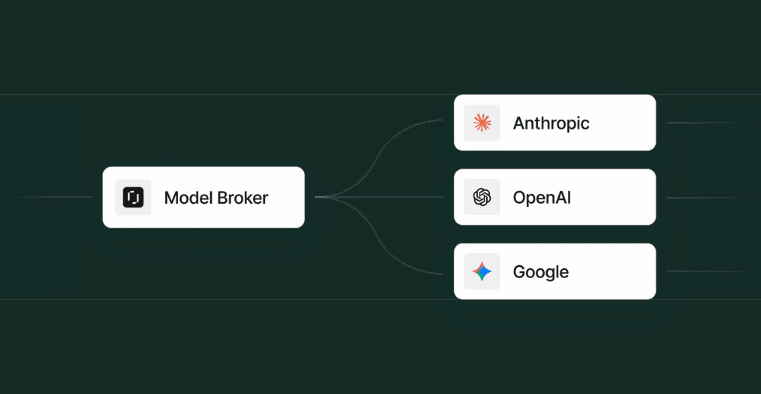
What a firm builds has to stay durable, which is where Rogo Intelligence and model independence meet. What the firm encodes remains its own and moves with it when it changes AI providers. Model Broker applies the same independence at the model level, routing each task across Anthropic, OpenAI, and Google, which the AI labs' own routers cannot do because they can only reach models inside their own family.
All of this is deployed as a partnership rather than a license. Rogo's forward-deployed team goes on-site and encodes the firm's own way of working into agents, which is the difference between a platform a firm has bought and one it actually runs on.
PE deal cycles are now AI-infrastructure problems
The firms getting the most out of AI run it across the whole investment cycle rather than at isolated touchpoints. A tool that helps at one stage still leaves the team moving work between systems everywhere else, and that movement is where context and hours are lost.
Model capability keeps converging, so what stays differentiated is not what a system can produce but the intelligence a firm encodes and keeps: how it evaluates a business, what its best investments had in common, and the judgment behind each decision.
Deployment and adoption decide outcomes more than features do, which is why a partnership is worth more than a license. A platform that reaches partners and daily users alike, and that is shaped around how the firm already works, is the one still in use a year later.
To see what that looks like across your own investment lifecycle, book a demo or speak with Rogo's team.
FAQs
How is purpose-built AI for private equity different from a general-purpose tool like Claude?
The difference is what the firm keeps. A general-purpose assistant gives a firm a capable model to prompt, but what the firm teaches it stays inside that provider's memory as unstructured text, so the work of encoding how the firm operates starts over whenever the firm changes tools. Rogo Intelligence holds that knowledge as structured, permissioned records the firm owns and can carry across whichever AI systems it uses. It also puts a layer of separation between the firm and the AI labs, carrying the attribution, permissioning, and audit trails a regulated environment requires where conversations routinely contain MNPI.
The rest is depth. In private equity, the clearest example is a firm's own investment criteria: the characteristics it screens for and how it judges a business. Rogo codifies those criteria in the firm's own memory, so every screen, diligence pass, and memo reflects how that firm actually invests rather than a generic view of a good deal. Underneath, an agent library of hundreds of practitioner-built finance agents and finance-grade data integration do the work, and Model Broker routes each task across Anthropic, OpenAI, and Google so the firm is never tied to one AI lab.
How long does it take to deploy Rogo at a private equity firm?
Timelines depend on the firm's security review and the scope of integration, though the model is built to move quickly. Rogo's forward-deployed team of former finance professionals works on-site to encode firm workflows, connect data sources, and train users, rather than handing over a login and a manual.
Adoption is the part worth planning for. At Baird, Rogo reached 95% engagement across global investment banking within a few months of rollout, which reflects the on-site work as much as the platform itself.
How does AI handle confidential data across competing portfolio companies inside the same fund?
Separation has to be enforced in the architecture rather than in policy. Rogo runs isolated environments so one company's material never reaches another, holds MNPI in logically separated memory tiers, and applies permissions, audit trails, and data residency controls to every query and output.
Because the firm's precedents and deal knowledge are held as permissioned records rather than model memory, access can be scoped by deal, team, or business unit and changed as a company's restrictions change. Sensitive material stays contained while approved knowledge still compounds across the firm.
Can AI replace external advisors or consultants on diligence work?
It changes what a firm needs advisors for more than it removes the need for them. Work that was outsourced because it was labor-intensive, including first-pass document review, data cuts, and market mapping, can now run in-house at a speed that makes external help unnecessary for that portion of the process.
Rogo ran the M&A analysis for four of its own acquisitions on its own platform, receiving first-cut deal summaries in under ten minutes without hiring external advisors. Judgment-heavy advisory work is a different matter, and specialist opinions on tax, legal, and technical questions still carry weight a firm cannot generate internally.
How should a private equity firm measure the return on its AI investment?
No single metric captures it, and the frameworks are still forming. Most firms today measure the return as productivity, the hours returned when a task that consumed an afternoon takes minutes, which is the most countable thing available rather than the most complete.
Two frames are becoming useful. The first is token spend as a share of headcount spend, roughly 5% at most firms today and heading toward 20%, which reduces to a direct question: does the technology make people at least that much more productive? The second is a break-even frame, asking how much incremental value, whether a deal won that would otherwise have been missed or a diligence process that surfaced a problem in time, would cover the entire AI budget.
The harder measurement problem is that AI still operates largely at the level of individual tasks, where the value is real but scattered in increments too small to isolate cleanly. As it climbs toward whole workflows and eventually whole transactions, the return shows up further up: in deals won, diligence covered, and portfolio performance, rather than in hours saved. The practical starting point is to gather the historical data now, including fees, headcount, hours, and token spend, so the comparison is possible later.


