BlogFAQs
AI for Investment Banking: Key Applications and Use Cases
An overview of AI adoption at investment banks, covering applications across research, deal-making, trading, and operations.
More than 40,000 financial professionals at over 300 institutions use Rogo to research companies, build models, and draft the materials that go in front of clients. This is only one measure of how far AI adoption has come in investment banking.
Investment banking is also one of the more demanding environments for AI. The work is highly templated, which sounds ideal for automation, but the bar for accuracy, sourcing, and confidentiality is unforgiving: a single incorrect figure on a board slide can cost a firm the mandate.
This article examines the real AI use cases across four core jobs deal teams do every day: building presentations, developing financial models, researching companies and industries, and preparing for critical decisions. It covers what separates a rough draft from a deliverable and the compliance bar every regulated institution has to clear. It also lays out how to evaluate the AI options available, from general-purpose tools to purpose-built platforms.
What AI in investment banking actually requires
The requirements for AI in investment banking become far more stringent once its output is to be presented to a client.
The sourcing standard comes first: every number on every slide must trace back to its origin, and every cell in a model needs a comment explaining where the figure came from. Material non-public information, or MNPI, cannot leak from one deal team to another inside the same building.
These and other standards define what makes AI output deployable rather than merely interesting. Deployable work also lives inside the tools deal teams already use.
Anything short of that standard must be re-checked by hand, which undermines the reliability the AI tool was adopted to provide.
Key AI use cases across the investment banking workflow
From building presentations and financial models to researching companies and preparing for critical decisions, deal teams put AI to work across various jobs. Each one carries its own output format, sourcing demand, and accuracy bar.
Build presentations
AI helps teams produce a range of presentations, including pitch books, business development decks, memos, CIMs, valuation packs, industry overviews, and more. But a draft is only useful when it follows the firm's own template and holds up to the standard a reviewer expects.
Felix, Rogo's autonomous AI agent, solves this by working inside the firm's own format rather than a generic layout. It shells out the materials a deal requires, assembling first-draft pages and full decks that already carry the firm's structure, and the same capability builds the pitch materials teams use to win new mandates.
Anyone on the team can mark up the deck directly in Rogo's slides annotator, commenting on individual slides the way they would annotate a PDF. Felix then works through that round of comments, mapping each one to the right slide and applying the edits in place without regenerating the deck. It can also produce finished pages in the firm's format in a single pass.
Every figure carries a deep-linked citation back to its source, so a reviewer can check any number without leaving the document. Because Felix builds and revises the deck directly, senior bankers can even self-serve rather than routing every request through a junior team.
Develop financial models
Financial models drive valuation and deal decisions, so their inputs have to be accurate and defensible. AI can build DCFs, LBOs, merger models, operating models, trading comps, transaction comps, and forecasts, but the output is only usable when every input is traceable.
Felix pulls its inputs from company filings, investor presentations, consensus estimates, and connected third-party data sources. Every figure in the models it builds links back to where it came from. When the source is a spreadsheet or data feed, the citation resolves to the exact sheet and cell it was drawn from, and figures from structured data providers are flagged as high fidelity.
A banker can verify every input in place, without rebuilding a tab, even on the most data-heavy spreadsheets. A model is complete only when its author can defend each assumption, and because each cell links back to a 10-K line or a transcript quote, that review is straightforward.
Research companies and industries
AI helps bankers analyze markets, competitive dynamics, business models, and sector trends. The same work supports a live mandate, a business development push, an ongoing client relationship, or the firm's own internal reviews.
The constraint here is rarely analytical skill. It is that the relevant material sits scattered across prior deal files, client decks, filings, and meeting transcripts, so a banker first has to spend time gathering files before the analysis even begins. Tools that pull that material into one place raise how much ground a team can cover on a single mandate.
Consider a banker working through an earnings transcript. Felix returns the key takeaways in a single pass and can hold several quarters side by side, showing how management's position has shifted over time. Each point links back to the line it came from.
Other research questions call for building a complete list instead of reading a single document: every company, deal, or transaction that fits a defined set of criteria. This is where screenings, one of Rogo's features, comes in. Rather than asking a model to guess at a list, a screening runs deterministically across structured data sources. A single query can return a complete set, for example:
Every public healthcare company above $500 million enterprise value
Every sponsor-backed deal in a defined sector over a set period
Every private company in a sector that has raised capital in the past 24 months
The output is exhaustive by design, which means the list can be handed to a client or built into a pitch without a manual sweep to confirm nothing is missing.
Research also accumulates. Every screening run, every transcript reviewed, and every prior deal file drawn on adds to what the firm knows about a company or a sector, and most of that has historically been lost. A CRM logs the relationship and a shared drive stores the document, but neither captures the reasoning behind the work.
Rogo Intelligence is where that context can now live. It sits between the firm's knowledge and the AI systems that use it, holding research context, precedents, and client history as structured, permissioned records rather than scattered files. A banker picking up a name the firm has covered before starts from what the firm already knows about it, instead of assembling that picture again.
Prepare for critical decisions
AI helps deal teams run deal processes end to end: managing diligence, answering investment questions, and driving execution. Instead of an associate spending a morning assembling a briefing, the material arrives already prepared and sourced.
Alongside the live process, firms use AI to keep watch on the market between mandates. Rogo's scheduled tasks track companies, sectors, and filings on a set cadence, checking daily for defined triggers such as M&A activity in a target sector, notable headlines, or material events for tracked names. Alerts arrive on schedule without anyone logging in to ask.
Most of this work runs off the deal's virtual data room (VDR), and connecting it directly is what changes how much of a live process AI can cover. Rogo syncs with the data room through its SS&C Intralinks integration, so documents stay current as the room updates instead of being downloaded and re-uploaded at every turn.
That connection is what puts real volume of context behind the work. A deal team works from the full data room rather than the subset of files someone has uploaded by hand, and that sits alongside the firm's own precedents, its connected enterprise systems, and the email traffic around the deal. Questions that require reading across all of it, rather than across a single document, become answerable in one place.
Scope of that kind is only usable if the context stays governed. MNPI sits in logically separated memory tiers, and isolated environments keep one deal team's material away from another, so the whole room can be in play without widening who can see it.
Why generic AI falls short on client-ready IB work
General-purpose AI is fast and useful for a first pass. Once a firm moves from occasional use to running real work through it across the business, relying on a generic tool runs into limits:
It ties the firm to a single AI lab, leaving no fallback when that lab's models degrade or grow more expensive.
Where routing exists, it is confined to that provider's own family of models, so a task cannot go to whichever model handles it best or most cheaply, and spend may climb as usage scales.
Whatever the firm teaches AI stays inside that provider's memory as unstructured text, so the work of documenting how the firm operates begins again the moment the firm changes tools.
That memory carries no attribution, permissioning, or audit trail, which is disqualifying in an environment where conversations routinely contain MNPI.
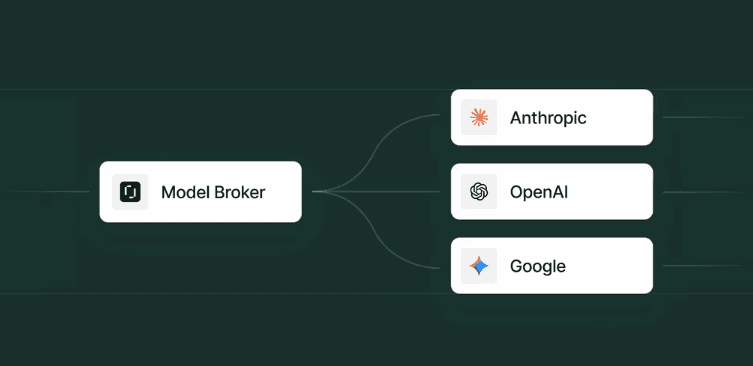
Rogo answers the first two with Model Broker, its model router. Several AI labs now ship routers of their own, but a router built inside one provider's product can only reach that provider's models. Model Broker routes across Anthropic, OpenAI, and Google, so the firm is never locked to one AI lab whose models might degrade or go down, and each task goes to the model that delivers the right answer at the lowest cost. Scaling AI across the firm does not scale the bill in lockstep.
Another factor is that frontier models are converging on the same capabilities, and whatever one does well today, the others will do well soon after. That makes output quality an inadequate basis for choosing a tool. What stays differentiated is the firm's own knowledge: how it runs a process, what its best people judge to be right, and the precedent behind each decision.
Rogo Intelligence is where that knowledge is held. It keeps a firm's precedents, workflows, and client history as structured, permissioned records carrying provenance and a full audit trail, rather than as text accumulating in a model's memory. Because it sits independently of any single model, a firm can move to whichever model leads next without rebuilding the context that made the last one useful.
What regulated institutions can't compromise on
Some requirements are simply non-negotiable, and every one of them eliminates candidates. The hard list includes:
MNPI handling that keeps material non-public information contained
Isolated environments so competing client data never mingles
Granular permissions aligned to who should see what
Complete audit trails for every query and output
Data residency controls to satisfy jurisdictional rules
Recognized security certifications that hold up under scrutiny
These rule out most consumer and prosumer AI immediately. A tool can be genuinely useful and still be undeployable at a bank, because useful and deployable are two different standards.
How a finance-built platform meets the bar
Rogo operates within firm security perimeters using isolated environments that protect proprietary data across competing institutions. Its posture covers SOC 2, ISO 27001, and GDPR, with bring-your-own-key encryption, SCIM provisioning, and data residency controls. MNPI sits in logically separated memory tiers, so confidential information never bleeds into general knowledge.
The platform has also completed external-auditor-validated compliance with the EU AI Act, ahead of full enforceability. Security is also tested continuously rather than annually.
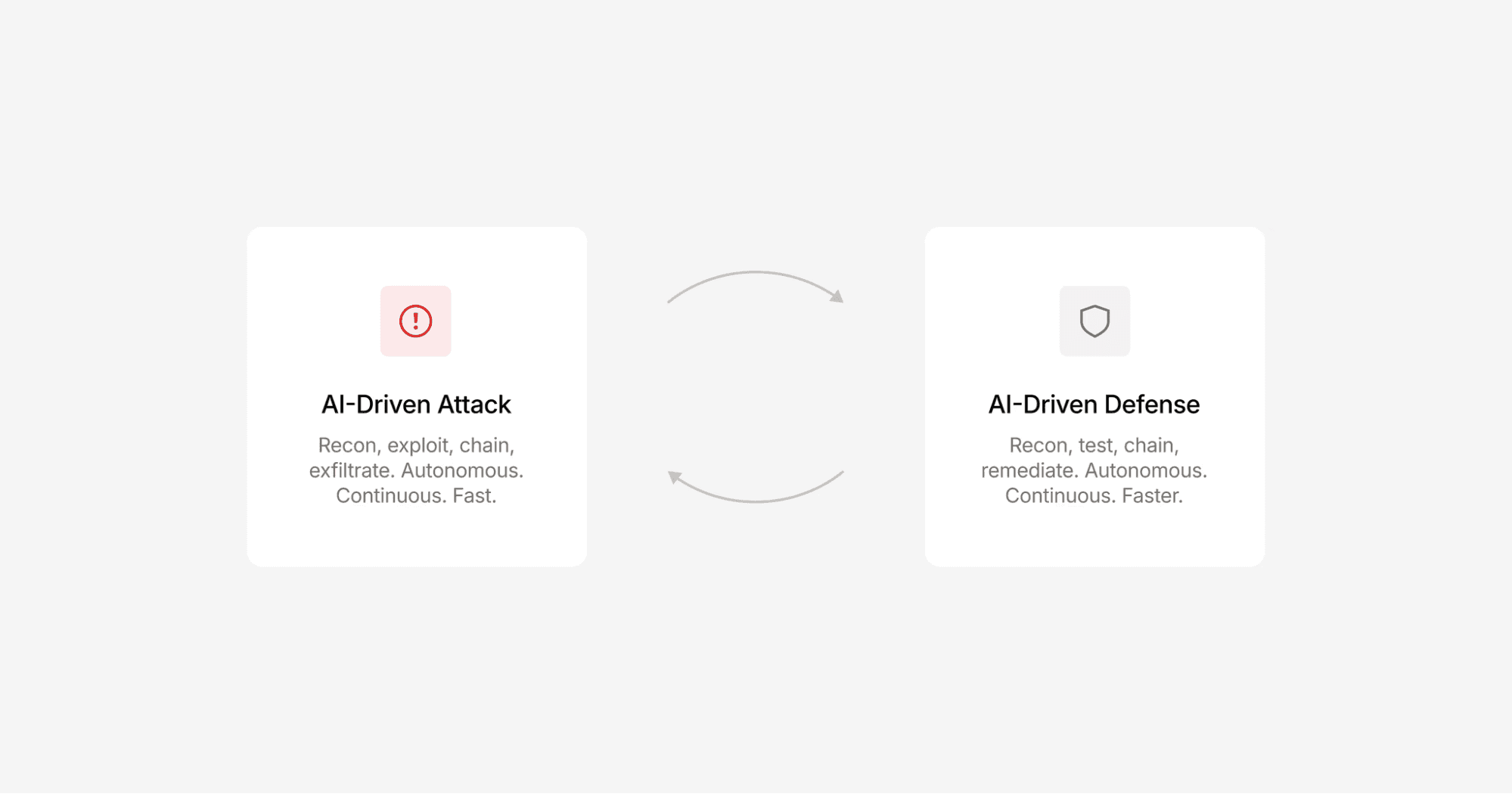
Sisyphus, Rogo's autonomous security agent, runs offensive penetration testing once or twice a day. In one session it found 18 exploitable issues that a preceding two-week manual pen test had missed, all identified and fixed the same day.
Sisyphus works in three phases: pre-recon, offensive testing, and automated remediation.
From one-off prompts to agents
Security and workflow coverage make a platform deployable. What makes it durable is capturing how a firm actually works: its templates, deal precedents, client preferences, and senior judgment.
Institutional knowledge loss is a real cost in banking, and the systems firms have used to hold it, like CRMs and shared drives, were never designed to fully solve that problem.
Rogo's answer starts with pre-built, firm-specific agents that encode how a particular bank does particular work, like how one firm structures a pitch or formats a CIM. Rogo's forward-deployed team goes on-site, learns the workflows, and builds these agents from each firm's own precedents, so the output arrives in the firm's house style from the first run.
Rogo agents put the same capability in users' hands. Bankers build their own custom agents directly in chat and share them across the firm, and those agents compound with ongoing usage and connected data sources.
Underneath sits a three-tier institutional memory:
Memory tier | What it holds |
|---|---|
User | An individual's working style and recurring preferences |
Project | Client preferences, deliverable conventions, and deal-level context for a specific engagement |
Firm | Aggregated institutional intelligence: deal history, precedents, and best practices |
That structure replaces ad hoc prompting with standardized, shareable workflows. Rogo is working toward turning this captured knowledge into a firm-owned intelligence layer for finance.
As teams run deals and build agents, the platform captures that work as structured, permissioned data the firm owns. It is not ungoverned text sitting in a model's memory, and it stays available across whichever models the firm chooses instead of locked to a single vendor.
Evaluating AI for investment banking
Banks weigh three approaches when bringing AI to client-ready work: building in-house, extending general-purpose tools like Claude, and adopting a finance-specific platform. Each delivers something different against the compliance, workflow, and citation bar.
A third-party platform vs internal builds
A dedicated finance-AI partner ships and maintains capabilities faster than an internal roadmap can. It also carries the security, compliance, and audit work that clears approvals in a regulated environment, work that would otherwise consume a bank's own quarters.
Internal builds tend to stall for predictable reasons. Hiring specialized AI talent is hard, approval cycles slow every decision, and the pace of frontier AI development outstrips what any single institution can track.
A purpose-built platform lets the bank's own technology team focus on firm-specific integration and priorities instead of maintaining foundational AI infrastructure from scratch. That shortens the path to an approved, deployable tool.
Where general-purpose Claude fits
General-purpose assistants like Claude are capable tools. For low-stakes drafting, quick ideation, and first passes on non-sensitive material, they are fast and genuinely useful.
The real question for a bank is not whether these tools are good. It is how much of its work should depend on a single model. Frontier models change constantly, and a firm that standardizes on one lab inherits that lab's pace, pricing, and priorities.
A risk-averse institution is better served spreading that exposure across models than committing to one. This is why Rogo runs on Model Broker, its model router, which sends each task to the frontier model best suited to it across Anthropic, OpenAI, and Google. Work gets done even if some models degrade or go down.
The same task can run at $1.26 on a top-tier model or as low as $0.02 through optimized routing.
Then there is also a last-mile problem. A general model can carry a banker most of the way on a broad task, but deal work is judged on the final stretch: the sourcing, the firm's own template, and the compliance posture. Because Rogo is built for one industry, it closes that gap and takes a workflow from roughly right to client-ready.
One way this is done is through Rogo's agent library: hundreds of purpose-built agents across investment banking, private equity, private credit, and more. These are hand-built by former practitioners and tested against live companies until the output meets the standard of a leading institution. The shared library has run more than 430,000 times.
Also, Rogo's forward-deployed team builds custom agents on top of it for each firm. In a recent week, the team built more than 2,450 agents with customers. A general AI assistant offers none of this finance-specific scaffolding.
The last gap is control. Running AI across a bank calls for enterprise controls a general tool does not provide. But Rogo's credit center gives administrators one place to monitor, forecast, and govern AI spend across teams, deals, geographies, and business units. Rogo also encodes and permissions a firm's precedents, templates, and judgment, so that intelligence stays owned by the firm rather than sitting in a general model's memory.
What an effective tool looks like
Some capabilities are the baseline for client-ready work: MNPI controls and isolated environments for competing clients, integration into the tools deal teams already use, and citations that trace to the source. A platform that misses any of these might struggle to clear the starting line.
Meeting a fixed checklist, though, is not the same as making the right long-term choice. Such lists go stale fast, because the frontier moves every few weeks and a capability that looks decisive in one pilot is standard by the next.
What actually separates a platform over time is how fast it ships against that frontier, how completely it fits a firm's own workflows, and whether it is already running at scale rather than demoed. Those factors are harder to score on a page than a feature count, but they decide whether a tool still holds up a year after the pilot.
Cost and governance matter just as much at scale. As usage grows across a bank, the questions that count are whether the platform keeps spend efficient and gives administrators the controls to manage it, which is where Rogo’s Model Broker and the credit center come in.
The standard has changed, and so has the bar for AI
Investment banking has little tolerance for work that is only roughly right, which is what makes it such a demanding environment for AI. A general model can get a banker to a draft, but client-ready work has to match the firm's template, clear compliance, and trace every figure to its source.
Closing the gap between that draft and client-ready work is what a platform built for finance is designed to do. That’s why leading firms turn to such platforms rather than adapting consumer apps or maintaining internal builds.
Rogo is deployed across deal teams at firms like Baird, Jefferies, and Lazard. To see the difference, book a demo and watch it run against your own workflow.
FAQs
What makes a finance-specific AI platform different from general-purpose AI?
The difference is the operating system around the model. A general-purpose tool gives a firm a model to prompt; a finance-specific platform like Rogo is an operating system the firm runs its work inside, using any frontier model it chooses. Its Model Broker routes each task across Anthropic, OpenAI, and Google to the model that fits best, so the firm is never tied to one lab and runs more cost-efficiently than sending everything to a single premium model.
Around that, Rogo scaffolds the firm's own data, precedents, and templates, so the system works the way the firm does and that knowledge stays owned by it. Because it is built for one industry, it takes a workflow the last mile from roughly right to client-ready. It keeps material non-public information separated inside isolated environments, which is what makes it deployable at a regulated institution in the first place.
How long does it take to deploy Rogo across an investment bank?
Timelines vary with a firm's security review and integration scope, but the model is designed to move quickly. Rogo's forward-deployed team of former finance professionals works on-site to encode firm workflows and train users. At Baird, Rogo reached 95% engagement across global investment banking within a few months of rollout.
What's the expected payback period on AI investment at an investment bank?
The clearest way to size payback is a deal break-even: take the firm's average fee and ask how many incremental mandates would cover the entire AI budget. For most franchises that is only a handful of deals, which turns the question into whether a better-prepared team can win three or four more mandates a year.
Most firms today still measure the return as productivity, the hours saved when a task that once took an afternoon takes minutes. That is the starting point rather than the ceiling. As AI climbs from individual tasks to whole workflows, the return increasingly shows up in the topline, in mandates won and deals advanced, not just time returned.
How does AI handle confidential deal data across competing client teams within the same bank?
A purpose-built AI platform enforces separation at the architecture level. Rogo, for example, runs isolated environments so one team's deal data never reaches another, holds MNPI in logically separated memory tiers, and applies permissions, audit trails, and data residency controls to every query and output. Because the firm's own precedents and templates are stored as permissioned data rather than model memory, access can be scoped by team, region, or business unit as a deal's restrictions change.